
Summer storms roll through Garrett County quickly, and they don’t always give homeowners much warning. When heavy rainfall combines with saturated ground, water finds its way into basements through foundation cracks, overwhelmed window wells, or a sump pump that couldn’t keep pace. Knowing what to do in the first hours after a flood can make a real difference in how much damage you end up facing. 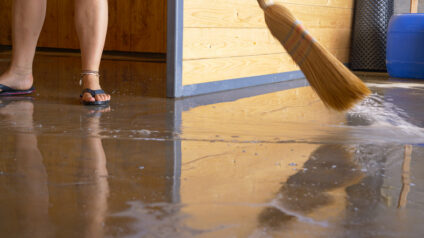
For homeowners dealing with basement flood cleanup in McHenry, MD, time is the most important factor. The longer standing water remains in your home, the deeper it penetrates the flooring, walls, and framing materials, making recovery more difficult and costly.
Step 1: Make Sure the Space Is Safe to Enter
Before walking into a flooded basement, your first concern should be safety, not cleanup. If water has reached electrical outlets, the breaker panel, or any appliances, shut off power to that area before going in. Never step into standing water near a live electrical source.
If the breaker is inaccessible without entering the flooded area, call an electrician before doing anything else. Gas appliances can also present a hazard if water has disrupted connections or pilot lights. If you have any doubt about whether the space is safe, stay out. Property can be replaced.
Once you’ve confirmed the space is safe, put on rubber boots and gloves before entering. Floodwater, even from heavy rain, can carry contaminants from drains, soil, and other sources.
Step 2: Identify the Type of Water Involved
The water in your basement isn’t all the same, and knowing its type shapes how you approach cleanup.
Category 1 water comes from a clean sanitary source, such as a broken supply line or a water heater failure. It’s the safest type to work with, but it still needs to come out quickly.
Category 2 water contains contaminants that may cause illness if you’re exposed to it. Washing machine overflow and some sump pump backflows fall into this category.
Category 3 water is highly contaminated and may contain sewage, bacteria, or harmful material. Sewer backups and heavy rain-driven floodwater entering from outside are typically Category 3.
If you’re unsure where the water came from, treat it as Category 3 and avoid direct contact until the source is confirmed. Protective gear is essential in these situations, and professional help is the safer choice.
Step 3: Document Before You Start Moving Things
Before touching anything, take photos and video of the entire space. Capture water levels marked on walls, affected flooring and furniture, visible structural damage, and any belongings that are submerged or wet. Walk through every corner of the basement.
This documentation matters if you contact your insurance provider and decide to file a claim for the damage. Don’t discard items yet, even if they appear to be a total loss. Wait until you’ve completed your documentation and spoken with your provider about next steps.
Step 4: Remove Standing Water as Soon as Possible
Once the space is safe and documented, start draining the water. Effective basement flood cleanup begins by quickly removing standing water before it penetrates deeper into flooring and structural materials.
A wet/dry shop vacuum handles smaller volumes reasonably well. A submersible pump moves larger amounts far faster. For serious flooding, professional-grade extraction equipment goes further, pulling water from materials that consumer tools can’t reach. The goal is to remove as much water as possible in the first few hours, not to wait until you have the perfect solution.
Step 5: Dry the Space Completely
Removing standing water is only half the job. Concrete floors, wood framing, insulation, and drywall all retain moisture long after visible water is gone. If that moisture isn’t pulled from the materials, mold can begin developing within 24 to 48 hours of the initial flood.
Industrial air movers and dehumidifiers are the right tools for structural drying. Running fans and opening windows helps when outdoor humidity is lower than what’s inside, but for any significant basement flood cleanup, consumer equipment alone won’t be enough. Restoration professionals use moisture meters to track where water has traveled and confirm that drying is complete before closing up walls or flooring. Skipping this step is one of the most common reasons homeowners end up dealing with mold weeks after a flood.
Step 6: Identify How the Water Got In
Once the immediate situation is under control, figure out the entry point. The most common causes include:
- Foundation cracks or gaps around pipes and utility conduits
- A sump pump that failed or couldn’t handle the volume
- Blocked or slow floor drains
- Grading that slopes toward the house rather than away from it
- Window wells without proper drainage or covers
Fixing the source won’t undo the current damage, but it will prevent the same problem from recurring after the next heavy rain. A restoration team working on basement flood cleanup in McHenry, MD can often identify these entry points during the assessment and point you toward the right next steps before another storm rolls through.
The Cost of Waiting Too Long
Every hour standing water remains in your basement increases the scope of the damage. Mold can begin to colonize wet drywall, insulation, and wood framing within 24 to 48 hours. Once mold takes hold, remediation becomes a separate, more involved process layered on top of the water damage restoration.
Structural materials that stay saturated begin to fail. Drywall softens and crumbles. Wood subfloors can warp or buckle. Insulation compresses and loses its effectiveness. What could have been addressed with prompt basement flood cleanup in McHenry becomes a much larger and more expensive reconstruction effort.
Acting quickly after a flood protects your home’s structure and limits the total damage. Waiting almost always makes things worse.
Basement Flood Cleanup in McHenry, MD
Discovering a flooded basement is stressful, and the situation can move quickly. When you need professional basement flood cleanup in McHenry, MD, NuWay Restoration & Cleaning is ready to help. Our team provides water extraction, structural drying, and full damage assessment to get your home the attention it needs as quickly as possible. Contact NuWay Restoration & Cleaning today for a free assessment and to start the recovery process.